
CRO and Vendor Data Management Oversight for Small Biopharma Sponsors: Interview with Dawn Edgerton
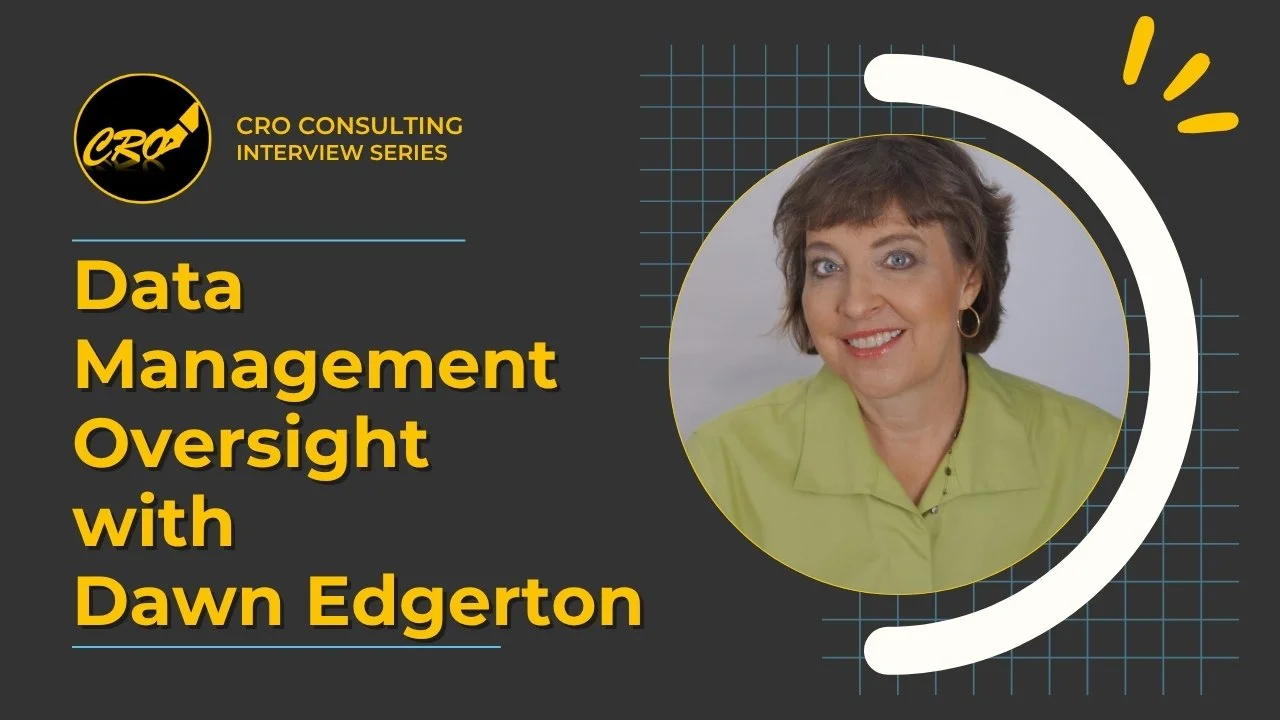
Dawn Edgerton has over 25 years of experience in research computing and more than a decade leading clinical trial teams across all functional areas, including project management, clinical operations, data management, data standards, biostatistics, medical writing, and statistical programming.
She has an MBA with concentrations in BioSciences Management and Services Management from NC State University in Raleigh, North Carolina, and a BS in Mathematical Sciences with a Computer Science Option from the University of North Carolina in Chapel Hill, North Carolina.
As the founder of Edgerton Data Consulting, she specializes in providing biometrics vendor oversight to small biopharma sponsors, helping ensure data integrity and operational efficiency across the clinical development lifecycle.
-
I started my career in data management and statistical programming supporting NIH longitudinal studies in Fragile X Syndrome at UNC-Chapel Hill. I really enjoyed working closely with principal investigators and their teams to collect, clean, and analyze data.
After 10 years at UNC, I transitioned to a small CRO, where I began as a statistical programmer and worked my way up into leadership roles. I ultimately focused on project resourcing and managing sponsor relationships across data management, statistical programming, and statistics, supporting both large and small pharma sponsors.
-
While working at CROs, I noticed that mid-sized and large pharma companies typically had internal teams dedicated to vendor oversight. In contrast, small sponsors often relied on internal clinical operations teams to oversee all functional areas.
GCP requires sponsors to ensure trial-related activities, including those subcontracted to CROs, are managed effectively. With today’s clinical landscape and multiple data collection methods, this is a tall order for a small sponsor. I started Edgerton Data Consulting, LLC in late 2015 to provide biometrics functional oversight on behalf of small sponsors.
-
It’s extremely important to understand how decisions impact downstream processes. Data integrity applies to the entire lifecycle of the data—from data collection to the tables, listings, and figures used in writing the clinical study report.
-
One of the biggest challenges today is managing the growing number of data sources. Clinical endpoints are often derived from not only CRF data but biomarkers, sensors, electronic clinical outcome assessments, and more.
A proactive approach means involving data management early—especially in risk management planning. Including data management in both the creation and ongoing review of the Risk Management Plan is time well spent and can prevent downstream issues.
-
A common misconception is that data management is the same as EDC management. In reality, for many studies, the EDC contains only a portion of the overall data.
-
First, it’s important to remember that the EDC is just one component of the broader data ecosystem.
With that in mind, sponsors should prioritize systems that make data review as efficient as possible for medical monitors and clinical teams.
It’s also critical to understand how post-production updates are handled, as those processes can significantly impact timelines and data quality.
-
Start with data currency—you can’t clean data that hasn’t been entered.
From there, it’s important to monitor query trends. For example, recurring queries may indicate that sites don’t fully understand CRF instructions. Regular review of data entry and query metrics helps identify and address small issues before they escalate.
-
We’re already seeing this shift. We live in an exciting and changing world for clinical data. New platforms are integrating CRF and vendor data into unified systems, allowing for more efficient data review and querying.
Additionally, generative AI tools are emerging that can “learn” from previous studies and help identify risks—such as potential participant withdrawals. I am hoping to see these technologies become more affordable for small sponsors to employ. Clinical Data Management Strategists need to understand, test, and ensure that these systems are implemented correctly.
-
Staying informed is critical. Professional organizations like the Society for Clinical Data Management, CDISC, and PHUSE regularly share advancements in compliant, innovative solutions.
They are invaluable for understanding how to adopt new approaches while maintaining regulatory alignment.
-
When sponsors acquire assets from other companies, it’s essential to create an inventory of the data they’re inheriting, the data format, and associated documentation. For example, are you receiving SDTM datasets or just raw data?
Maintaining a Study Data Standardization Plan throughout the lifecycle of the asset will make a significant difference later. You will be patting yourself on the back when it is time for thinking about meeting with the FDA!

Data Management Consultant
Edgerton Data Consulting LLC
919-270-3100
dawn@edgerton-data.com
