
Digital Mental Health: The FDA, AI, and the Future of Regulation
Insights from the FDA's Virtual Meeting on Digital Mental Health Platforms and Devices
The FDA recently convened a virtual meeting to discuss the accelerating growth of digital mental health tools and the evolving regulatory framework needed to ensure safety, effectiveness, and responsible innovation. The conversation underscored major gaps between regulated Prescription Digital Therapeutics (PDTs) and widely available mental health apps, especially those using AI, emphasizing the need to re-evaluate regulatory requirements in this rapidly evolving space.
Key Takeaways:
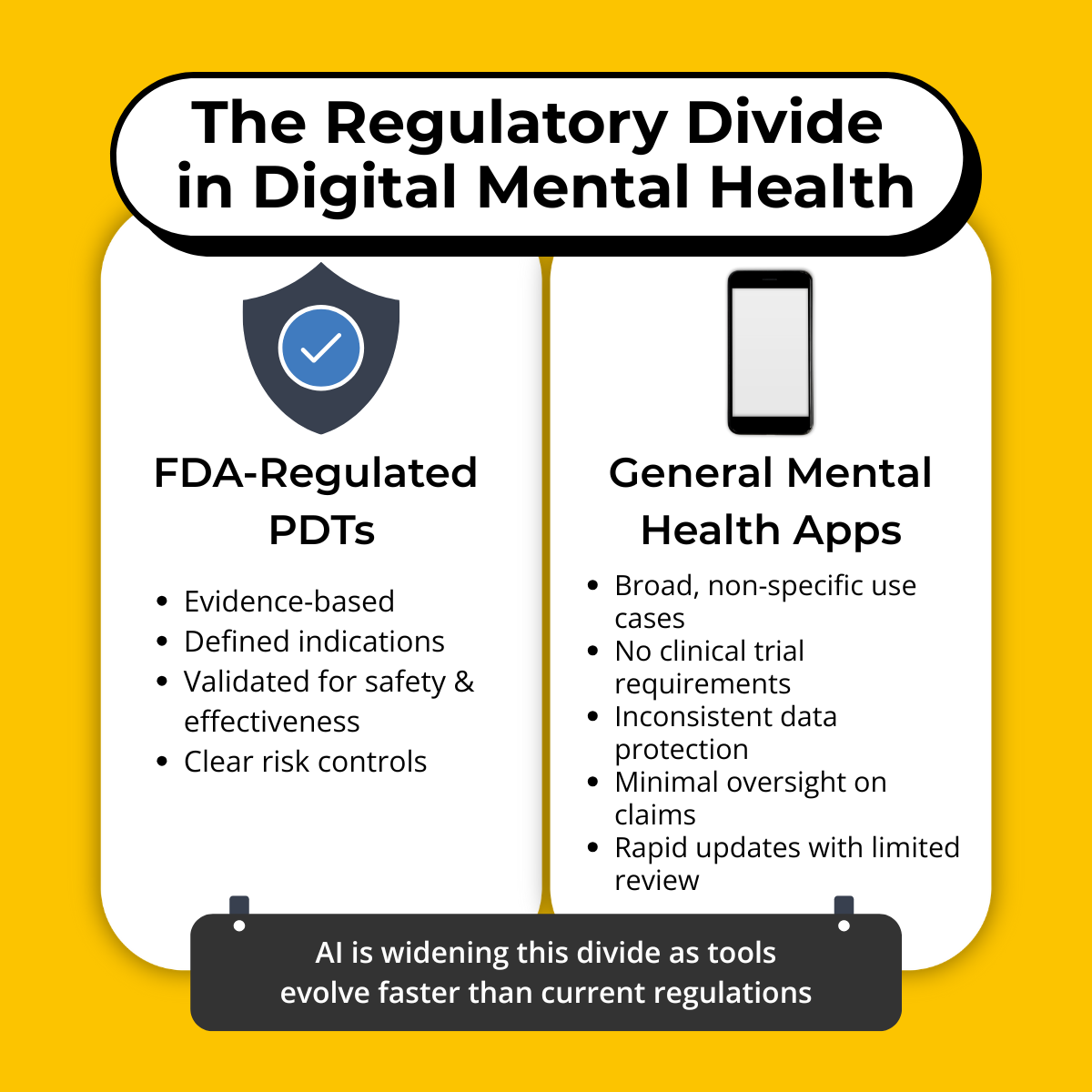
The Regulatory Divide: A central theme was the widening disparity in regulation between rigorous, FDA-regulated PDTs and the broader category of digital mental health software. As AI-driven tools rapidly expand, many agreed that the regulatory distinctions and corresponding expectations must be clarified to keep pace with current technologies.
AI, Safety, and Stipulations: Significant concerns were raised centered on minors' access to AI platforms (like chatbots) and the assumption that some AI tools offer therapeutic benefits without evidence. Recommendations included establishing clear requirements for AI-based mental health tools:
Defined indications and eligible users
Differentiating standards for clinical validation, regulation, and safe utilization across PDTs and non-regulated mental health apps
Monitoring mechanisms for practitioner-facing data
Built-in prompts to encourage help-seeking, even in the absence of a formal diagnosis
Data Ownership and HIPAA: The discussion addressed the critical question of data ownership: who should own the application data—developers, patients, or clinicians? Discussion also explored the points at which HIPAA may apply and emphasized the need for companies to provide additional training, safeguards, and tools to protect customer data, especially in the increasingly interconnected, global development environment.
Improving Clinical Trial Representation: Concerns were raised regarding strict eligibility criteria in clinical trial study designs, which lead to study populations that are not representative of real-world users. Real-world patients who may use these in practice may have co-occurring mental health conditions. This calls for clinical trial designs to capture the complexity of this patient population to ensure generalizable results.

Regulating Continuous AI Updates: Frequent AI updates create challenges for maintaining approval compliance after a product is already cleared. FDA guidance related to this topic includes AI Predetermined Change Control Plan (PCCP) and a draft guidance proposing a Lifecycle management and marketing submissions for AI-enabled devices, among others, which are ways the FDA is committed to supporting these products and the inevitable updates while maintaining oversight.
Ongoing advisory committee meetings are imperative as new AI innovations outpace the rates at which current regulatory processes can adapt.
Full Meeting Recording: Watch the Recording
