How lifescience founders can turn regulatory uncertainty into actionable FDA feedback and avoid costly trial delays.
Engaging with the U.S. Food and Drug Administration (FDA) is a pivotal milestone for early-stage life science companies. Whether preparing a therapeutic candidate for initial clinical trials or advancing an in vitro diagnostic (IVD) toward commercialization, timely interaction with clear regulatory objectives helps prevent costly delays and streamlines product development.
Part I: Navigating Pre-IND Strategy for Therapeutic Products
Interactions with the FDA regarding therapeutic products require strategic timing and well-defined questions. Initiating contact too early can hinder product development if the agency’s feedback exceeds current feasibility, while waiting too long may lock in assumptions that agency feedback later disrupts.
Timing is a Strategic Decision
Early-stage companies frequently navigate strategic tradeoffs. For example, a sponsor may engage toxicology vendors and draft a protocol synopsis while dose rationales or formulation details remain fluid. Requesting a Pre-IND meeting under these conditions presents a choice between seeking early alignment and risking premature protocol commitments.
Premature Engagement: Product definitions remain fluid and inquiries are overly broad, leading to generic feedback that offers limited strategic value.
Delayed Engagement: Vendor agreements are finalized and protocols locked, creating financial and operational friction if the FDA requests modifications.
The Pre-IND Trigger Test
Before requesting a Pre-IND meeting, assess readiness across four key criteria:
Impact on Study Design: Will FDA feedback directly inform study design, primary endpoints, target patient populations, or control group selection?
Guidance Clarity: Are the core questions unaddressed by published FDA guidance documents?
Product Context: Is there sufficient product-specific data for the agency to conduct a meaningful scientific review?
Decision Alignment: Will agency feedback arrive in time to inform upcoming operational and development deadlines?
Essential Components of a Pre-IND Briefing Package
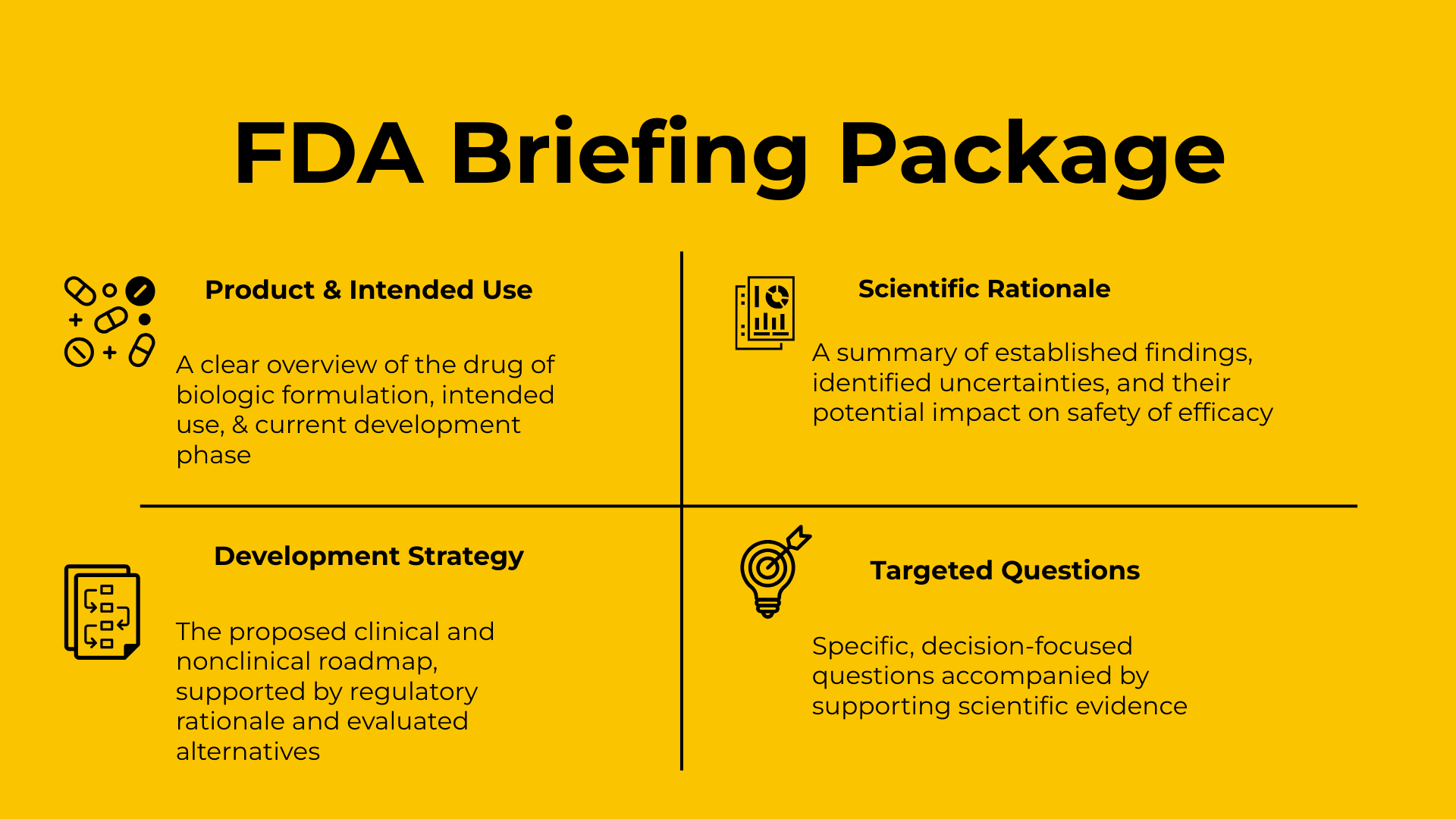
A comprehensive Pre-IND briefing package should center on four foundational elements:
Product & Intended Use: A clear overview of the drug or biologic formulation, intended clinical indication, and current development phase.
Scientific Rationale & Data Gaps: A summary of established findings, identified uncertainties, and their potential impact on safety or efficacy.
Development Strategy: The proposed clinical and nonclinical roadmap, supported by regulatory rationale and evaluated alternatives.
Targeted Questions: Specific, decision-focused questions accompanied by supporting scientific evidence and the sponsor's position.
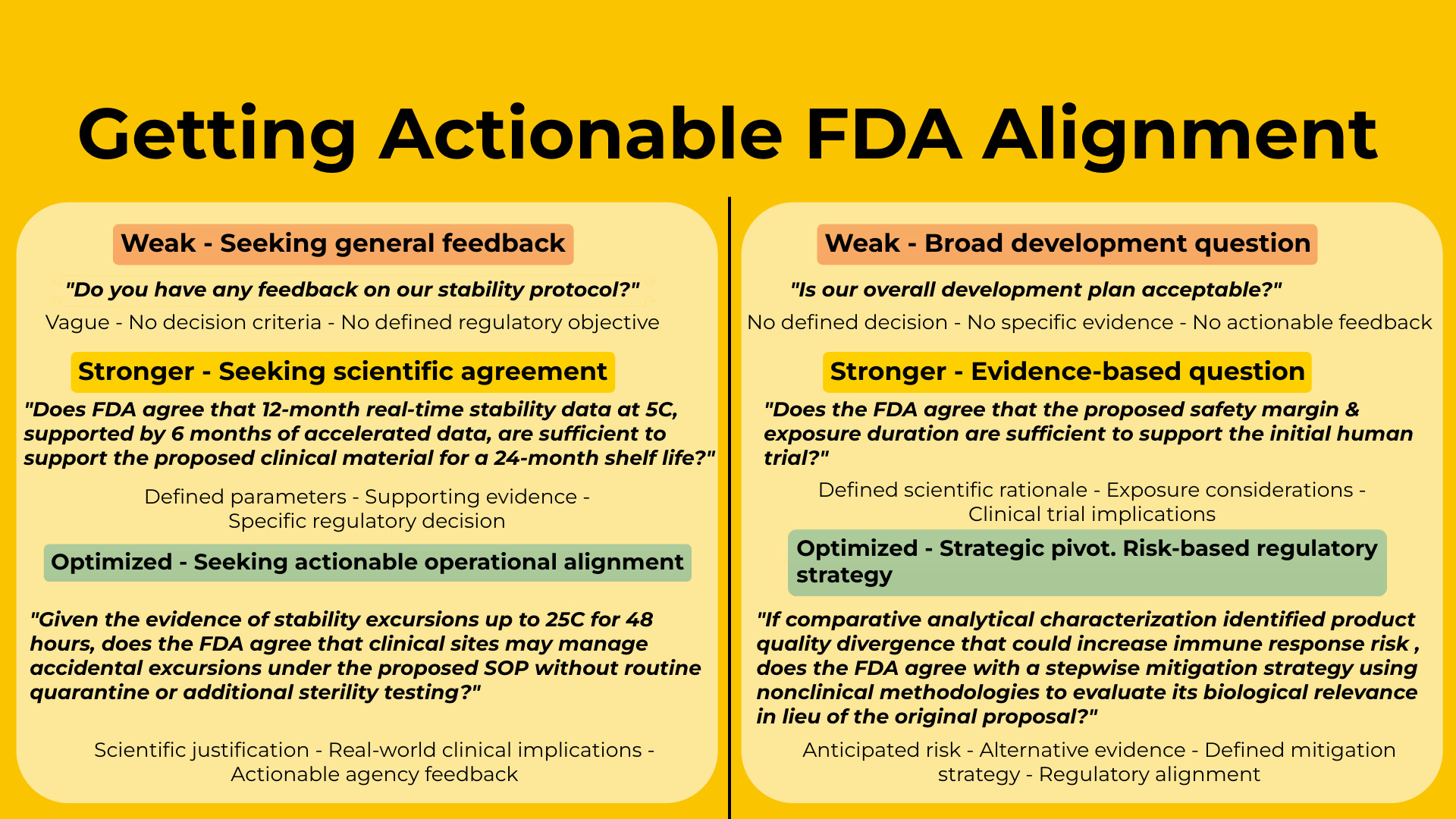
Refining Regulatory Questions: Crafting Actionable Questions
Broad inquiries often yield non-committal or conservative responses. To maximize value, state the sponsor's position clearly and limit each query to a single, focused decision point.
Part II: IVD Clinical Evidence & Submissions
Developing clinical evidence for in vitro diagnostics (IVDs) involves distinct operational and statistical considerations. Unlike traditional therapeutic trials, IVD studies must address clinical workflows, operator variability, matrix variations, and comparator validation.
Core Pillars of IVD Pre-Submissions
When compiling analytical and clinical evidence for an FDA Q-Submission, structure the strategy around three core pillars:
Intended Use Claim: Define the target biomarker or analyte, target population, clinical testing environment (e.g., Point-of-Care vs. Over-the-Counter), and intended user profile.
Comparator Strategy: Identify reference methods or FDA-cleared predicate devices, and establish standardized procedures for resolving discrepant results.
Statistical Sample Targets: Determine sample sizes for positive and negative cohorts to demonstrate analytical sensitivity, specificity, and cross-reactivity limits.
Providing clear preliminary data on performance characteristics enables productive agency discussions, helping refine study designs and advance development efficiently.
Managing Technical and Operational Risks in Multiplex Assays
Multiplex diagnostic panels introduce technical considerations that undergo rigorous regulatory review during submission evaluations.
Analyte Performance: Validate individual performance metrics for each target analyte included in the multiplex assay.
Co-Infection Interferences: Assess whether the simultaneous presence of multiple target analytes alters amplification kinetics or binding affinity, particularly for low-prevalence targets.
Cross-Reactivity Evaluation: Test cross-reactivity and potential interferences against clinically relevant organism panels.
Operational Readiness Audit: Pre-Trial Red Flags
Prior to initiating clinical trials or submitting a Q-Submission, ensure the following common issues are addressed:
Unverified Comparator Methods: Changing comparator assays mid-study risks invalidating statistical outcomes and prior agency agreement.
Unverified Sample Handling: Incompletely assessing collection workflows, storage conditions, or freeze-thaw cycles can introduce data variability.
Low Disease Prevalence: Low target prevalence can slow trial enrollment unless prospective pre-screening or enrichment strategies are established in advance.
Mid-Trial Software Updates: Modifying algorithms or software during sample collection and testing introduces inconsistencies that compromise dataset integrity.
Strategic Summary & Next Steps
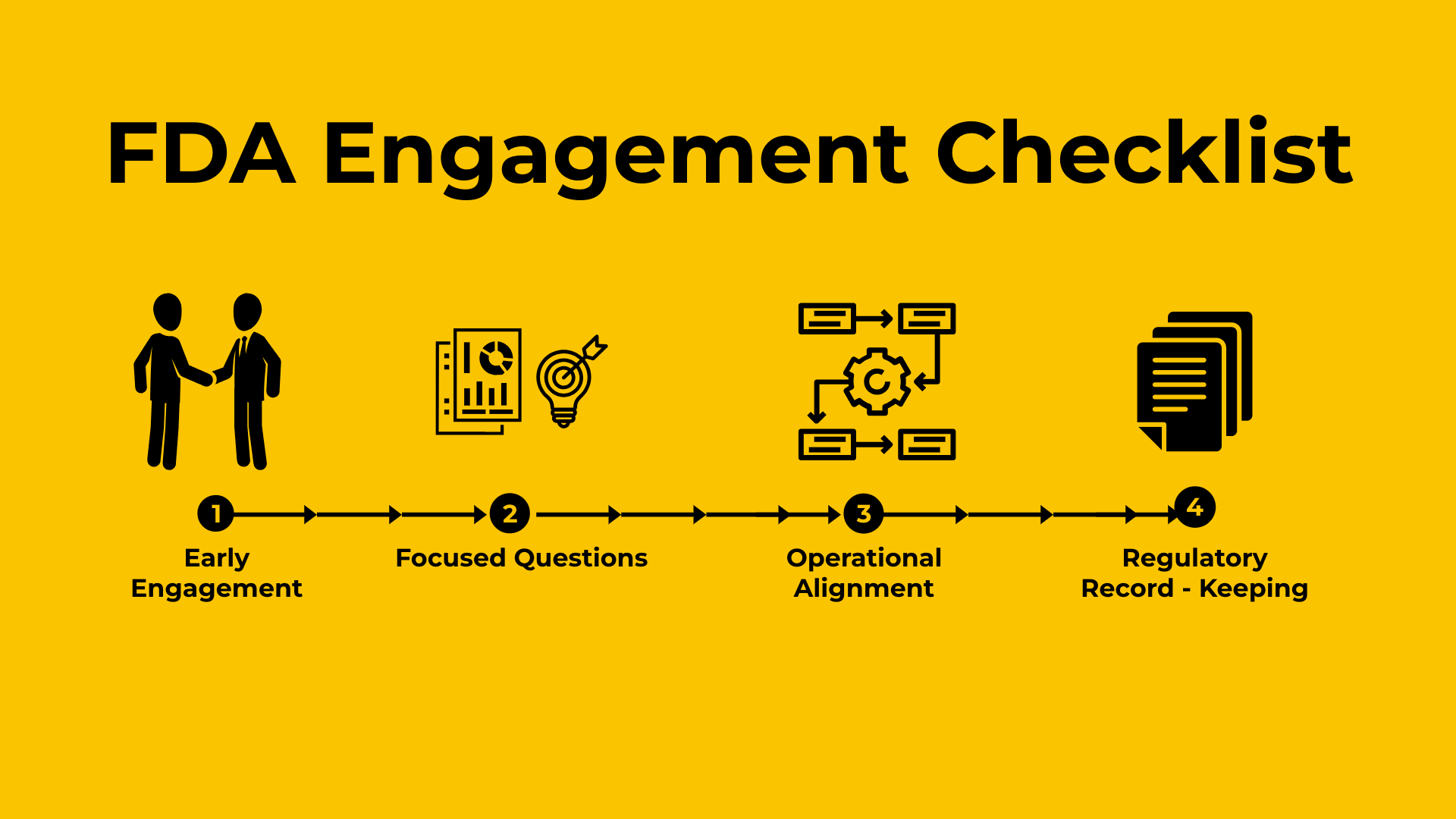
To maximize the value of FDA interactions, incorporate these core practices across regulatory filings:
Engage with the FDA: Consult the FDA before locking operational parameters or finalizing major vendor agreements.
Formulate Focused Inquiries: Present clear, decision-linked questions accompanied by solid product rationale and supporting data.
Align Statistical and Operational Plans: Ensure sample size targets, site logistics, and analysis plans are fully aligned prior to trial initiation.
Maintain Detailed Records: Document regulatory guidance, decisions, and rationale for design modifications throughout product development.
Immediate Action Item: Identify the primary regulatory decision point your team needs to resolve in the next 30 days. Assign an internal lead, draft the target question, and verify that supporting evidence meets readiness criteria before submitting.