As clinical trials rapidly evolve, the integration of advanced technology and decentralized trial (DCT) methodologies has fundamentally transformed participant engagement and data collection. Even in traditional site-based studies, sponsors are increasingly leveraging Participant-Reported Outcomes (PROs) and digital health technologies (DHTs) to capture real-time insights into treatment efficacy, disease progression, and participant well-being. By capturing the participant perspective directly in their day-to-day lives, study teams gain invaluable data that can accelerate clinical development and improve participant retention.
However, deploying multi-vendor technology stacks—ranging from electronic Clinical Outcome Assessment (eCOA) platforms to wearable sensors—presents significant operational and Good Clinical Practice (GCP) compliance hurdles. Without a unified, proactive oversight strategy, vendor technology glitches and misaligned processes can quickly jeopardize data integrity, delay timelines, and strain clinical operations resources.
Common Pitfalls & Operational Hurdles in Tech-Driven Trials
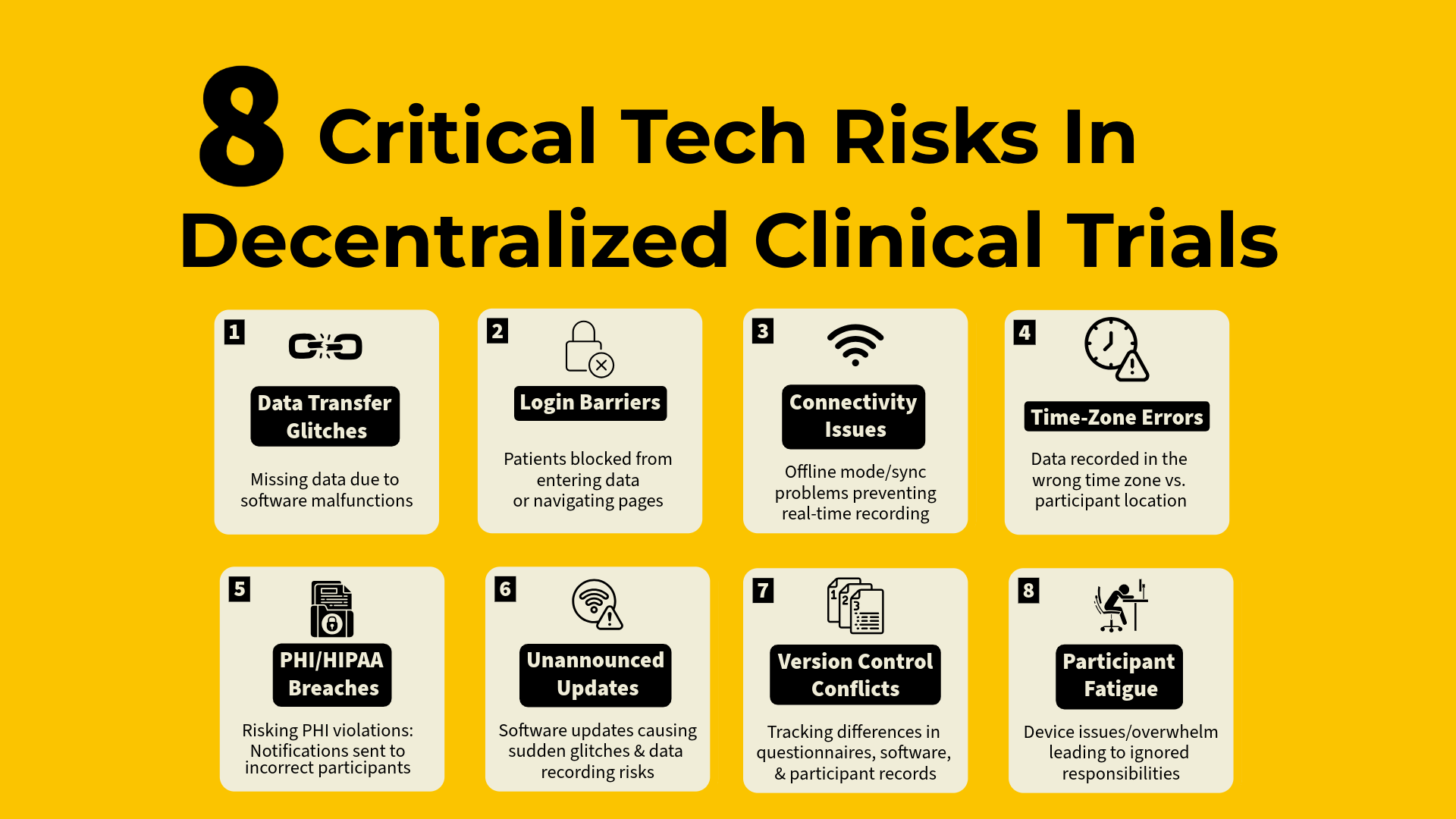
While digital health vendors offer state-of-the-art platforms, aligning external technical workflows with rigorous clinical trial operations and GCP standards is notoriously complex. Clinical operations teams frequently navigate eight major technical and operational risks during trial execution:
Data Transfer Failure & Software Glitches: Unexpected system glitches or failed API transfers can result in missing entire blocks of crucial participant data.
Application Login & Navigation Barriers: Authentication errors, forgotten credentials, or user interface bugs frequently prevent participants from completing time-sensitive questionnaires.
Connectivity & Synchronization Constraints: ePRO solutions requiring constant internet connection often fail in low-bandwidth regions, leading to uncaptured participant data.
Time-Zone Mismatches: Inaccurate device localization settings record participant inputs in incorrect time zones, complicating longitudinal data analysis.
PHI & HIPAA Privacy Breaches: Automated notifications or misconfigured routing sent to wrong participants expose Protected Health Information (PHI) and trigger severe regulatory non-compliance.
Unannounced Software Updates: Vendor system updates executed during active trial phases can introduce bugs, rendering participants unable to submit data within protocol-specified windows.
Version Control & Protocol Amendments: Tracking updates across modified questionnaires, software versions, and cohort sub-groups creates auditing and compliance risks.
Device Malfunctions & Participant Fatigue: Hardware failures combined with study burden often cause participants to ignore daily logging obligations, leading to missing data points.
Vendor Integration & Alignment
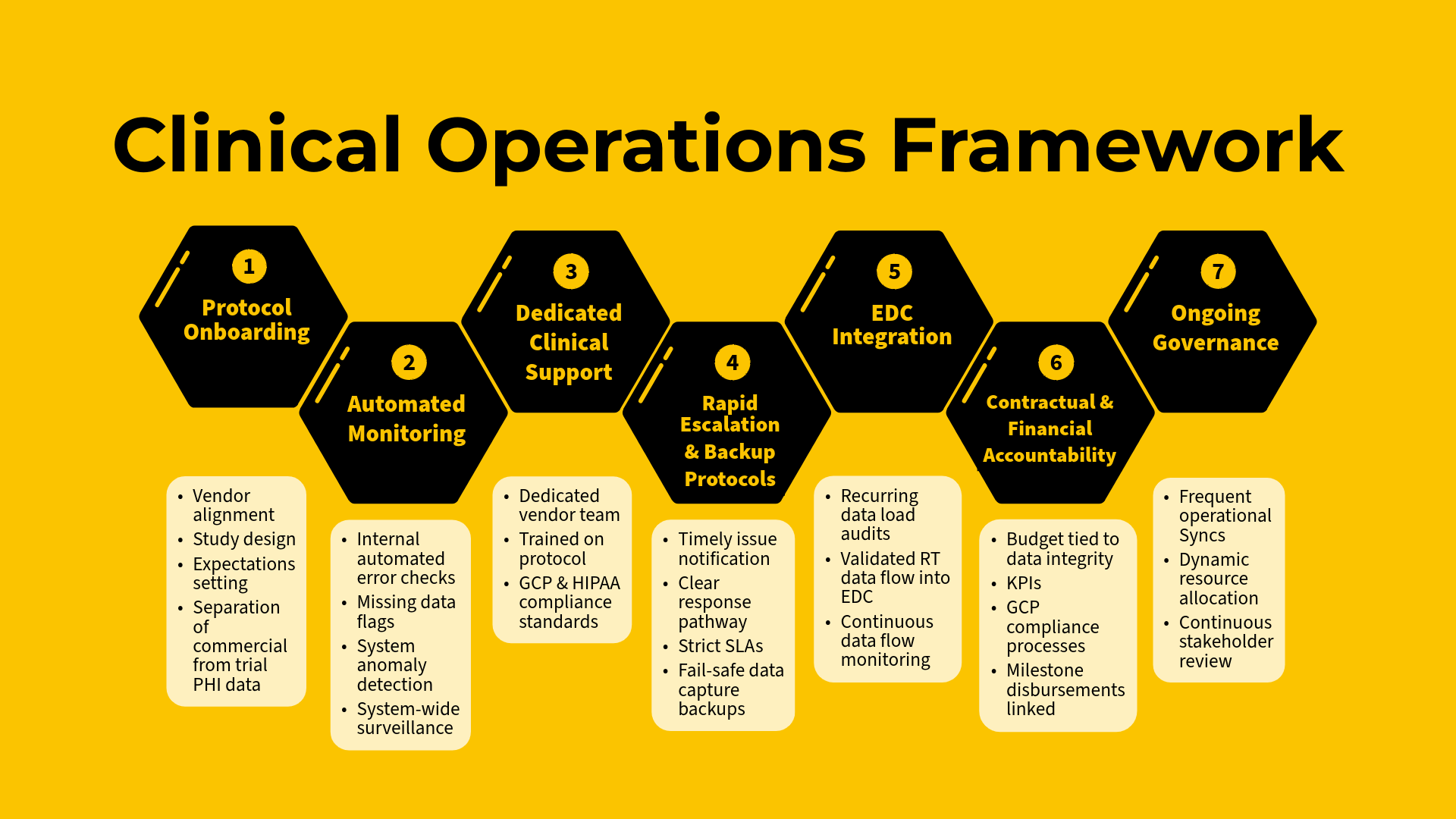
To prevent technical issues from derailing clinical timelines, sponsors and CROs should move away from reactive troubleshooting and establish a proactive clinical operations framework. Relying on software vendors to independently navigate protocol requirements often leads to miscommunications, delayed resolutions, and budget overruns. Setting explicit expectations up front is key.
Comprehensive Protocol Onboarding: Walk vendors thoroughly through the study design. Verify their mechanism for automated missing data flags, automated participant notifications, and strict architectural separation of commercial PHI from clinical trial data.
Proactive Automated Monitoring: Require vendors to run internal automated error checks to detect system anomalies throughout the trial instead of waiting for the Clinical Operations or CRO team to detect data discrepancies.
Dedicated Clinical Trial Support: Request that the vendor assign a dedicated team of support staff who are thoroughly trained on your protocol. Standard commercial customer support channels often lack the necessary alignment with rigorous GCP guidelines and HIPAA compliance standards.
Rapid Escalation & Backup Protocols: Establish strict service level agreement (SLAs) for issue notification and ensure fail-safe data capture backups are active until primary system outages are resolved.
Continuous EDC Integration Reviews: Schedule recurring data load audits throughout the trial rather than waiting for interim analysis milestones. Ensure continuous, validated data flow directly into your Electronic Data Capture (EDC) system, if possible for ease of monitoring.
Contractual & Financial Accountability: Bind technical performance, data integrity guarantees, and HIPAA/GCP compliance directly to vendor milestones and budget disbursements.
Governance & Resource Allocation Meetings: Maintain frequent operational syncs during high-volume recruitment phases so vendors can dynamically allocate support staff to critical trial milestones.
By taking proactive steps early during vendor contracting and protocol setup, clinical operations teams can minimize administrative burden, ensure data integrity, and smooth execution in decentralized trials.