Beyond the Big Name: Rethinking Clinical Trial Site Selection for Faster Enrollment
In the high-stakes world of clinical trials, there is a pervasive misconception among executives that "more sites" and "big-name institutions" are the silver bullets for meeting enrollment deadlines. The logic seems sound: partner with a subject matter expert at a world-renowned hospital to gain instant credibility and access to vast patient pools. However, the reality on the ground often tells a different story. Simply adding sites or chasing prestige doesn't automatically accelerate your timeline; in fact, it can sometimes do the opposite.
The Hidden Challenges of "Prestige"
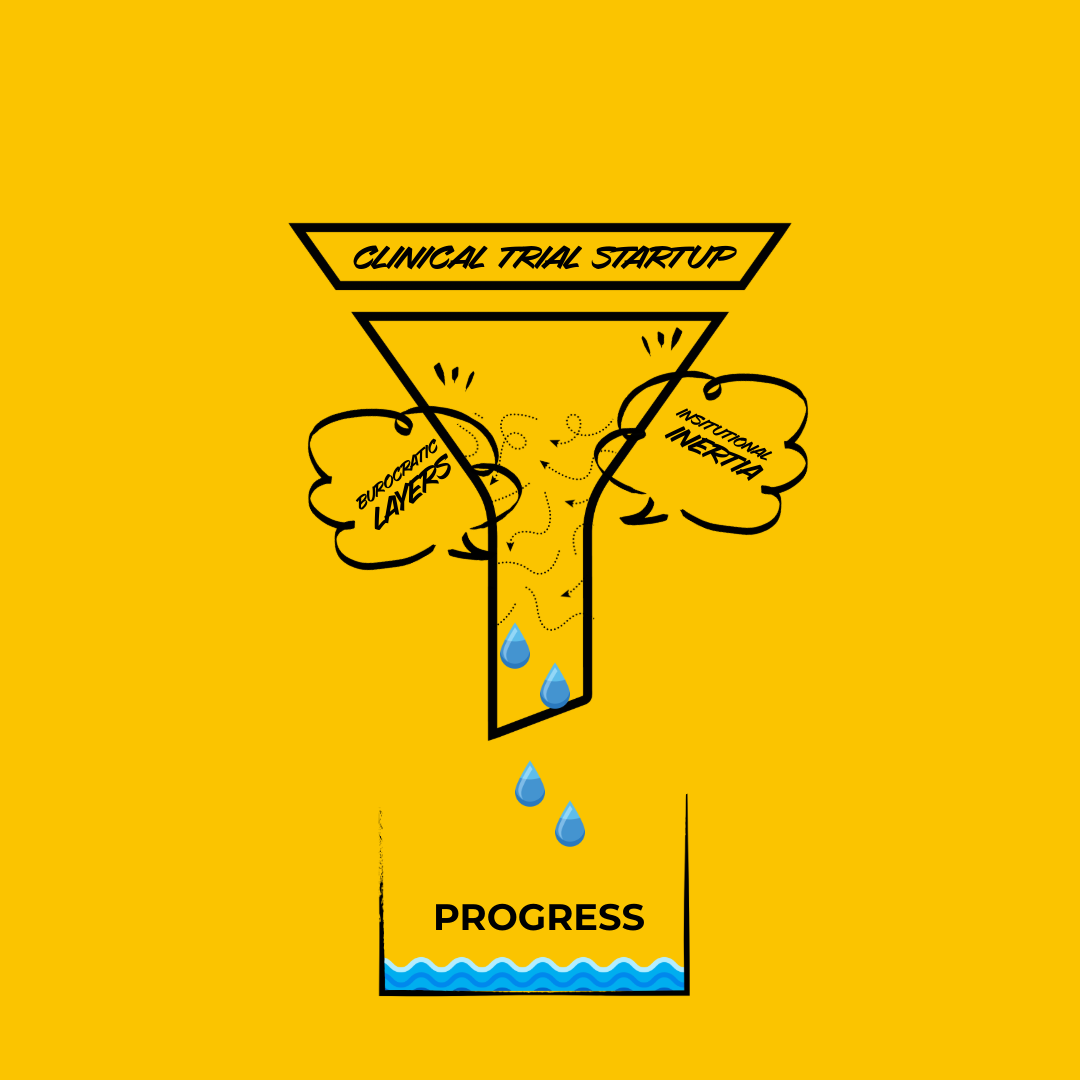
While top-tier institutions offer significant visibility and respect within the medical community, they come with inherent drawbacks. These "Subject Matter Expert" hubs often have multiple bureaucratic layers that can significantly delay study start-up and execution. Furthermore, their budgets are typically much higher due to their reputation and overhead. You may find yourself 100% dependent on a prestigious site that is unfortunately bogged down by institutional inertia, leading to slow recruitment despite their impressive name.
The Case for Strategic Selection
Smaller, specialized institutions, private clinics, and site management organizations often outperform their larger counterparts in recruitment and enrollment rates. These sites are typically more agile, have fewer administrative hurdles, and can be more deeply committed to the study's success. The key to a successful trial isn't the name on the building, but qualifying sites that possess the specific patient population you need and the operational willingness to move quickly.
7-Step Site Selection Checklist
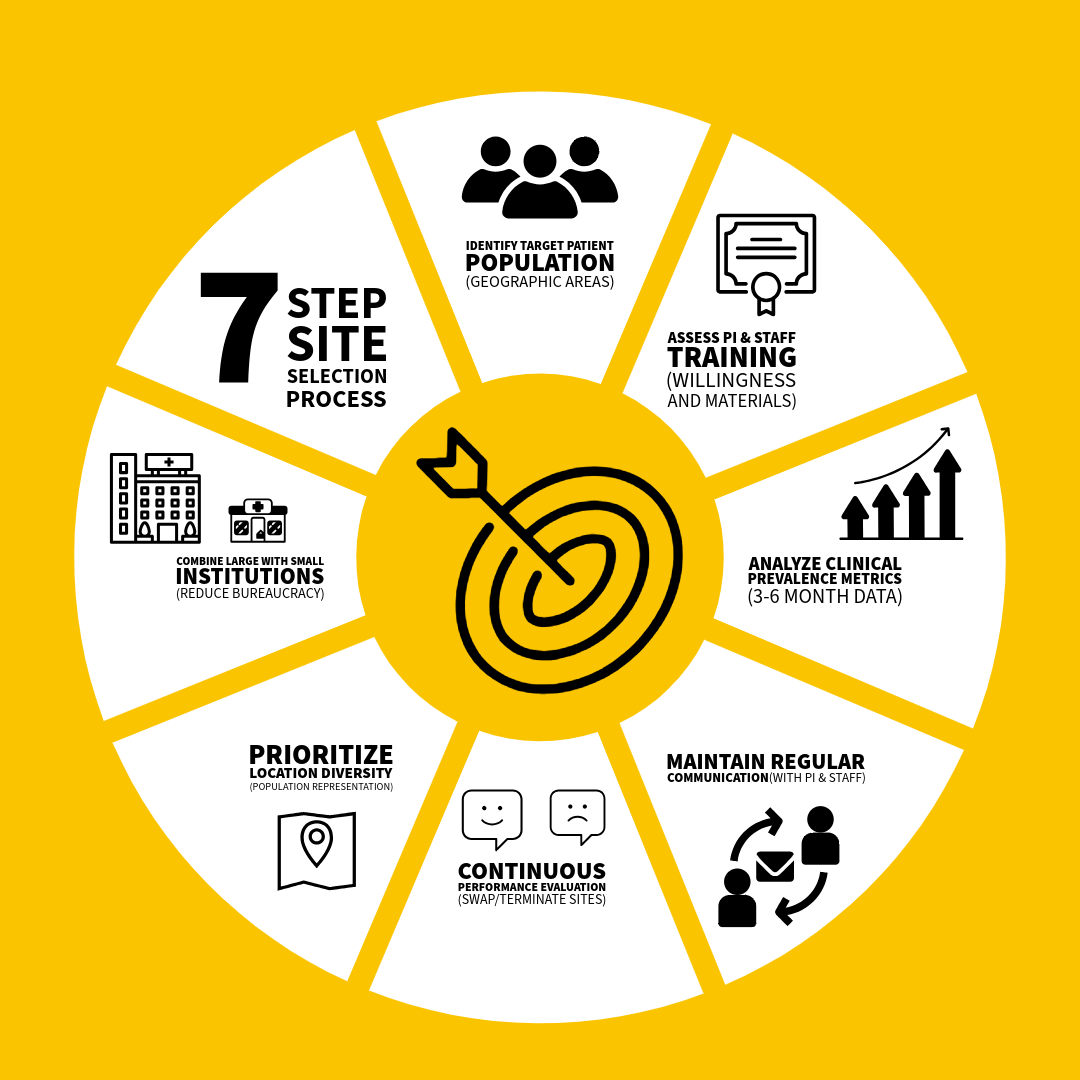
Identify sites in areas with a high prevalence of the target patient population.
Assess PI and staff clinical trial training and willingness, providing proven materials for screening and recruitment and trial execution.
Analyze prevalence metrics at the clinic within the last 3-6 months or time-period to ensure the site has the target population.
Maintain regular communication with the PI and his/her staff to identify and handle bottlenecks early.
Continuously evaluate performance and consider swapping or terminating underperforming sites.
Prioritize location diversity (e.g., East, West, and Midwest) to ensure population representation.
Prioritize smaller institutions for their agility and lack of bureaucratic layers.
Conclusion
When it comes to clinical trial enrollment, quality beats quantity. A well-known name might help with "early credibility" but operational agility and a direct match with the patient population are what actually get a study across the finish line. By shifting focus from prestige to performance, a sponsor can have both types of sites while ensuring the trial remain on schedule and within budget.